
A professional technician’s guide to decoding GE air conditioner display signals and performing safe DIY repairs in the United States.
Few things disrupt a sweltering American summer faster than a malfunctioning cooling system. For millions of homeowners and apartment dwellers across the United States, GE Appliances is the go-to brand for reliability. However, even the most robust units can encounter operational hiccups.
When your unit stops blowing cold air and starts flashing a cryptic alphanumeric sequence, you are likely looking at GE air conditioner error codes. Understanding these signals is the difference between a simple ten minute fix and an expensive, unnecessary service call. Based on common manufacturer data 2026, these codes are designed to protect the system’s compressor and internal electronics from permanent damage by alerting you to specific mechanical or electrical failures.
What the Error/Code Means
Error codes serve as the diagnostic language of your HVAC system. On a GE window unit, portable air conditioner, or through-the-wall model, the digital display usually reserved for temperature settings will switch to a two-digit code such as F1, E2, or 88. These are not random; they correspond to specific sensors or components that have reached a critical state.
For example, a code might indicate that the thermistor—the component that measures air temperature—has shorted out, or it might signal that the condensate tank in a portable unit is overflowing. Recognizing that these codes are protective measures rather than just “breakdowns” helps frame the troubleshooting process.
Common Causes for GE AC Failures
While each code points to a specific part, the underlying reasons for these triggers often overlap. Maintenance neglect is the primary driver of most residential cooling errors in the US.
| Error Code Category | Primary Meaning | Common Underlying Cause |
|---|---|---|
| Sensor Faults (F1, F2) | Thermistor or Room Sensor | Dust buildup or loose wiring connections |
| Drainage Issues (P1, FL) | Full Water Tank or Blockage | High humidity or clogged drain port |
| Communication Errors (E1, E2) | Control Board Signal Loss | Power surges or internal harness damage |
| System Protection (88) | Low Voltage or Logic Reset | Grid instability or tripped circuit breaker |
Step-by-Step Troubleshooting and Fixes
Before attempting any manual intervention, safety is the absolute priority. Always unplug the unit from the wall outlet or flip the dedicated circuit breaker in your service panel before servicing any internal components.
The Hard Reset Method
The most effective first step for many GE air conditioner error codes—especially those caused by temporary logic glitches like the “88” or “E1” codes—is a hard reset. Unplug the unit for exactly three minutes. This allows the internal capacitors to discharge completely. Plug the unit back in and wait for the display to cycle. If the code clears, it was likely a transient electrical interference issue.
For a complete overview of the reset process that works for most portable units, including safety tips and manufacturer variations, visit our guide: How to Reset Portable Air Conditioner After Error Codes or Power Outage.
Fixing Sensor and Thermistor Codes (F1, F2)
If the display shows F1 or F2, the unit is struggling to read the ambient temperature.
- Power down and unplug the unit.
- Remove the front intake grille and the filter.
- Locate the small, bulb-like sensor usually clipped near the evaporator coils.
- Ensure it is not touching the metal coils directly, as this can cause false readings.
- Clean the sensor with a dry cloth to remove dust insulation.
Addressing Drainage and Water Codes (P1, FL)
Portable units and some window models will shut down and show a P1 or FL (Full) code when the internal reservoir cannot hold more water.
- For portable units, move the device to a floor drain or take it outside.
- Remove the lower drain plug and let the water empty completely.
- If using a window unit, check the tilt. The unit should have a very slight backward tilt (about a quarter-inch) to allow water to move toward the rear of the casing.
- Ensure the weep holes at the back of the outdoor section are not blocked by debris or nesting insects.
Handling Communication and Board Errors (E-series)
Codes like E1 or E2 suggest the display board cannot talk to the main power board. This often occurs after a brownout or power surge. If a reset does not work, the internal wire harness may have vibrated loose. If you are comfortable opening the cabinet, you can verify that the plastic molex connectors are seated firmly on the control board.
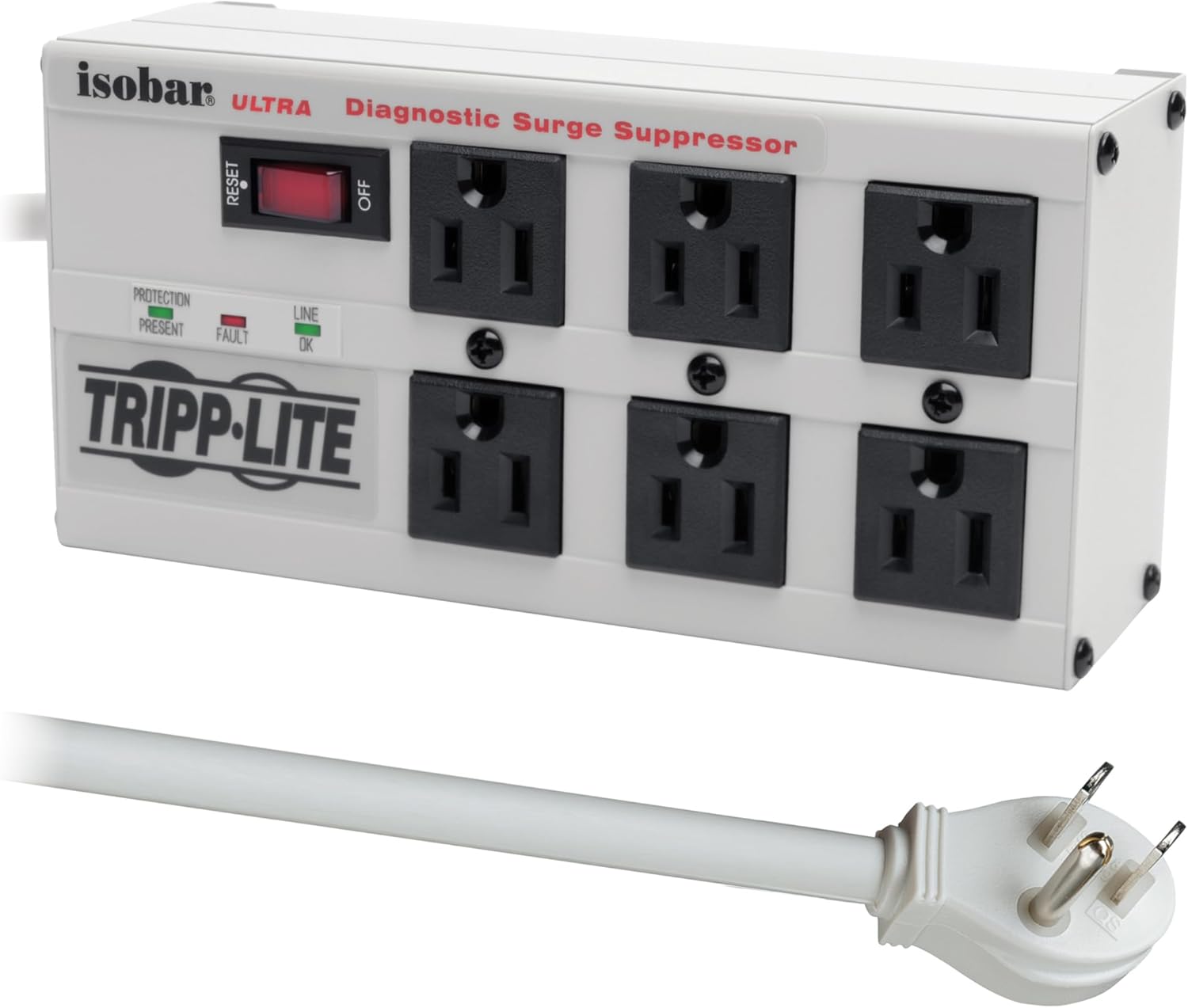
For those who find their units are beyond a simple wire tightening, investing in a reliable surge protector like the Tripp Lite Isobar can prevent these boards from frying during summer storms.
 |
| Buy it on Amazon |
Preventive Maintenance
The best way to avoid seeing GE air conditioner error codes is through a rigorous maintenance schedule tailored to the US climate zones. In high-humidity areas like the Southeast or the Midwest, filters should be checked every two weeks. A clogged filter restricts airflow, which causes the evaporator coils to freeze, subsequently triggering sensor errors.
Every spring, before the first heatwave, use a soft brush or a vacuum with a hose attachment to clean the condenser coils at the rear of the unit. If these coils are matted with dust or “cottonwood” seeds, the unit cannot shed heat, leading to high-pressure errors and eventual compressor failure. Additionally, ensure the power cord is plugged directly into a grounded wall outlet. GE explicitly advises against using extension cords, which are a common cause of voltage-drop errors.
When to Call a Professional
While many codes are DIY-friendly, certain situations require a licensed HVAC technician. If you encounter a code indicating a refrigerant leak (often signaled by ice formation on the coils alongside a generic error) or if the compressor fails to engage despite the code clearing, it is time to seek professional help.
Handling refrigerant requires EPA certification in the United States, and attempting to “recharge” a window or portable unit yourself is often dangerous and against federal regulations. If the issue persists after multiple resets and sensor cleanings, the main control board may need a professional diagnostic test to confirm a component failure.
Frequently Asked Questions
Why is my GE AC display flashing 88?
The 88 code is typically a startup communication signal. If it stays on the screen, it indicates a logic lock. Unplugging the unit for several minutes usually clears this.
Can I still run my AC if an error code is showing?
Most GE units feature a safety lockout that prevents operation when a code is active. You should not attempt to bypass these safety features, as they are designed to prevent the motor from burning out.
How often should I clean the sensors?
Sensors usually only need cleaning if you notice inaccurate temperature readings or receive an F-class error code. However, a general cleaning of the sensor area during your annual coil maintenance is recommended.
What if the code doesn’t appear in the manual?
Some newer GE models may display codes that were updated post-manual printing. In these cases, the “unplug for three minutes” rule is your most reliable diagnostic tool before calling support.
Conclusion
Navigating GE air conditioner error codes does not have to be a source of stress. By treating the code as a helpful guide rather than a terminal diagnosis, most American homeowners can restore their indoor comfort quickly and safely. Remember to stay proactive with filter changes and coil cleanings to ensure your unit stays code-free all summer long.
For those looking to keep their units running at peak efficiency, using a specialized AC coil foaming cleaner can help remove the deep-seated grime that standard vacuuming misses. Keeping your GE unit maintained is the most cost-effective way to guarantee a cool, comfortable home.